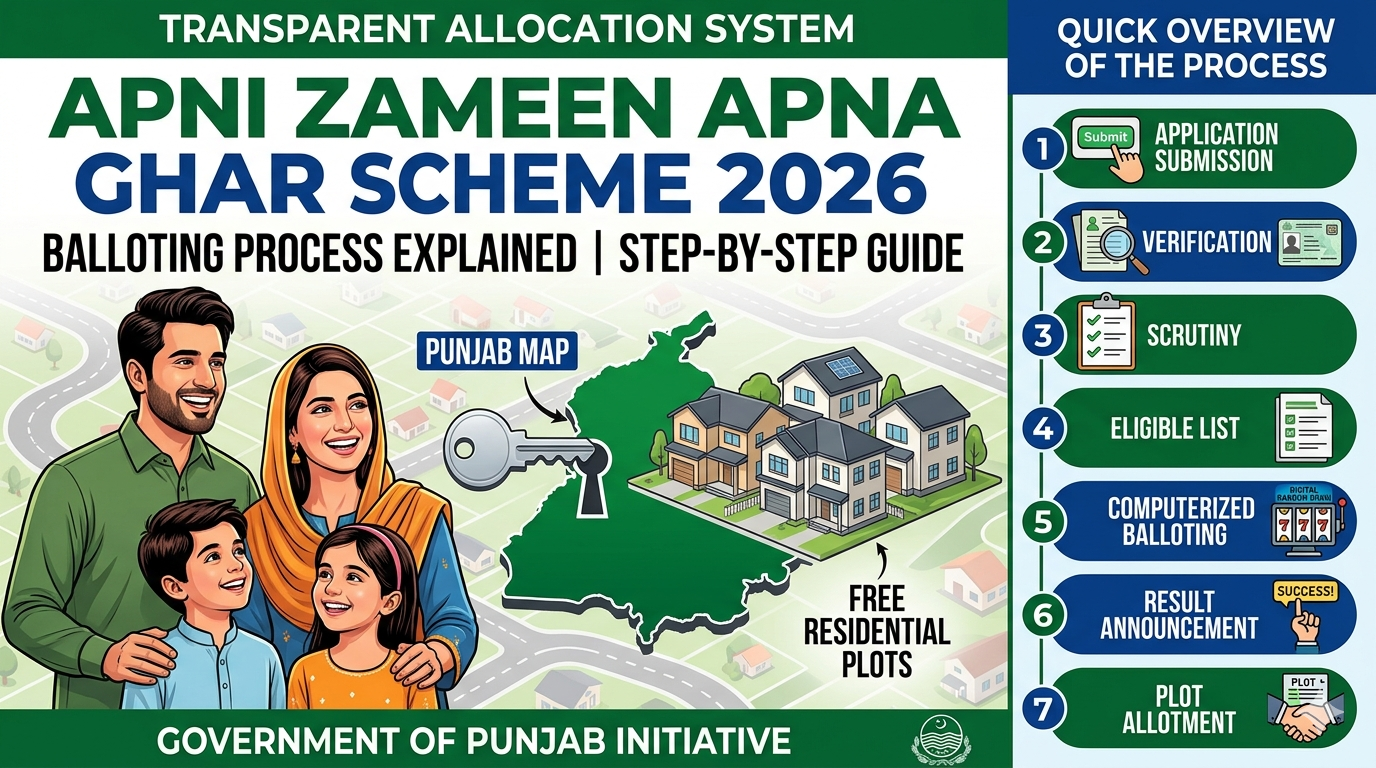
The Apni Zameen Apna Ghar Scheme 2026 has become one of the most discussed housing initiatives in Punjab. Thousands of families have submitted applications with the hope of receiving a free residential plot through the government’s transparent allocation system. While many applicants understand the registration process, a large number of people are still unsure about how the balloting process works and what happens after an application is submitted.
The balloting stage is one of the most important parts of the scheme because it determines which eligible applicants receive plots in the current phase. Understanding each step can help applicants track their status and avoid confusion during the selection process.
What Is the Apni Zameen Apna Ghar Scheme?
The Apni Zameen Apna Ghar Scheme is a housing initiative launched by the Government of Punjab to support low-income and deserving families who do not own residential property. Under the program, eligible citizens can receive residential plots through a computerized and transparent selection process. The scheme is being implemented through the Punjab Housing and Town Planning Agency (PHATA). According to official scheme information, the first phase includes the distribution of thousands of plots across multiple districts of Punjab.
Quick Overview of the Balloting Process
| Stage | What Happens |
|---|---|
| Application Submission | Applicant submits the online form and documents |
| Verification | Authorities verify identity and eligibility |
| Scrutiny | Records are checked against government databases |
| Eligible List Preparation | Qualified applicants are shortlisted |
| Computerized Balloting | Random selection is conducted digitally |
| Result Announcement | Successful applicants are notified |
| Plot Allotment | Plot numbers and allotment details are issued |
Why the Balloting Process Is Important
The government introduced computerized balloting to ensure fairness and transparency. Instead of manual selection, a digital system is used to choose successful applicants from the pool of verified candidates. This reduces the possibility of favoritism and gives every eligible applicant an equal opportunity within their district quota.
Step 1: Submission of Application
The process begins when an applicant completes the online registration form and uploads the required documents. Applicants must provide accurate personal information, CNIC details, contact information, and supporting records.
Incomplete applications may face delays during verification or may not move forward to the next stage. Government authorities advise applicants to ensure that all information matches official records before submission.
Step 2: Initial Verification of Records
After submission, applications enter the verification phase. During this stage, various government records are checked to confirm the authenticity of the information provided.
Verification may include:
- CNIC validation through official databases
- Review of property ownership records
- Examination of submitted documents
- Eligibility checks according to scheme requirements
- Cross-checking information available in government databases
Applications containing inaccurate or unverifiable information may be rejected before the balloting stage.
Step 3: Scrutiny and Eligibility Review
Once verification is completed, authorities conduct a detailed scrutiny process. This stage determines whether an applicant fulfills all eligibility requirements established under the scheme.
Officials review:
- Residential status
- Ownership records
- Family information
- Documentation accuracy
- Compliance with scheme rules
Only applicants who successfully pass scrutiny are included in the eligible candidate pool for balloting.
Step 4: Preparation of Eligible Applicant Lists
Before balloting takes place, district-wise lists of eligible applicants are prepared. These lists include only those individuals whose applications have successfully passed verification and scrutiny.
District-based preparation helps ensure that available plots are distributed according to the allocation plan established for each participating district.
Step 5: Computerized Balloting Begins
After the eligible lists are finalized, authorities conduct computerized balloting.
Unlike traditional manual draws, the Apni Zameen Apna Ghar Scheme uses a digital random selection system. Every verified applicant receives an equal chance of selection within the available quota.
The computerized system randomly selects successful candidates from the approved applicant pool without manual intervention. Government officials supervise the process to maintain transparency and accountability.
Key Features of the Digital Balloting System
The computerized balloting system includes several features designed to increase public trust.
| Feature | Purpose |
|---|---|
| Digital Selection | Eliminates manual interference |
| Random Allocation | Provides equal opportunity |
| District-Based Distribution | Supports balanced allocation |
| Official Oversight | Ensures transparency |
| Published Results | Allows public verification |
According to available scheme information, the computerized process is designed to provide fair and transparent plot distribution among qualified applicants.
Step 6: Announcement of Balloting Results
Once the digital draw is completed, authorities publish the results. Successful applicants can check their status through the relevant official channels.
Applicants are generally informed through:
- Official scheme portals
- SMS notifications
- Public result announcements
- Government communication channels
Applicants should regularly monitor official updates to stay informed about result publication dates.
Step 7: Issuance of Plot Allotment Details
Applicants selected through the computerized draw move to the allotment stage. During this phase, the relevant authorities prepare allotment records and assign plots according to the approved development plan of the housing project.
Successful candidates may receive information regarding:
- Plot location
- Plot size
- Scheme block or sector
- Allotment reference number
- Further verification requirements
Receiving a successful balloting result does not automatically complete the process. Applicants are usually required to comply with additional administrative procedures before final allotment documentation is finalized.
Step 8: Verification After Balloting
Government departments may conduct another review of selected applicants before issuing final allotment documents.
The purpose of this stage is to ensure that:
- Eligibility remains unchanged.
- Submitted information is still valid.
- No misleading details were provided during registration.
- Documentation requirements have been fulfilled.
If significant discrepancies are discovered during this stage, authorities may take action according to scheme regulations.
What Happens if an Applicant Is Not Selected?
Many applicants worry that a non-selected result means permanent disqualification. In reality, not being selected in one balloting round generally means that the applicant was not chosen within the available quota for that specific phase.
Because the number of applications is often much higher than the number of available plots, many eligible applicants may remain unsuccessful despite meeting all requirements.
Future phases of the scheme may provide additional opportunities depending on government policy and project expansion plans.
Understanding District Quotas
One important aspect of the balloting process is district-based allocation.
Instead of combining all applicants into a single province-wide pool, authorities generally allocate plots according to district-specific development plans. This approach helps distribute housing opportunities across different regions and supports balanced development.
The exact number of plots available in each district depends on:
- Available land resources
- Project planning
- Housing demand
- Government development priorities
This system allows local residents to benefit from projects established within their own districts.
Common Reasons Applications May Face Issues
While the computerized balloting process is designed to be fair, some applications may not reach the eligible pool because of documentation or eligibility concerns.
Examples include:
| Issue | Possible Impact |
|---|---|
| Incorrect CNIC Information | Verification failure |
| Incomplete Documents | Application delay |
| Mismatched Records | Additional scrutiny |
| Invalid Contact Information | Missed notifications |
| Failure to Meet Eligibility Criteria | Disqualification |
Applicants can reduce the risk of problems by carefully reviewing all information before submitting their forms.
How Applicants Can Check Their Status
After registration and during the balloting cycle, applicants often want to know the progress of their applications.
Status updates are typically made available through official channels established by the scheme administrators.
Applicants should keep the following information readily available:
- CNIC number
- Registration reference number
- Mobile number used during registration
Using accurate registration information helps applicants access updates more efficiently when results are announced.
Transparency Measures Used in the Scheme
Public confidence is heavily influenced by the transparency of the selection process. For this reason, several safeguards are incorporated into the balloting system.
These measures may include:
- Computerized random selection
- Digital record management
- Multi-stage verification procedures
- Official supervision of the draw
- Public result publication
Such measures are intended to ensure that plot distribution follows established rules and procedures.
Important Documents Successful Applicants May Need
After selection, applicants may be asked to provide or verify supporting records before final allotment documentation is completed.
Commonly requested documents can include:
- Original CNIC
- Family registration information
- Proof of residence
- Recent photographs
- Any additional records requested by authorities
Applicants should carefully follow instructions issued through official notifications and avoid relying on unofficial sources.
Tips for Applicants Waiting for Balloting Results
Waiting for results can be stressful, especially when demand for plots is high. Applicants can make the process easier by staying informed and relying only on verified information.
Helpful practices include:
- Monitoring official announcements regularly
- Keeping contact information updated
- Saving registration details securely
- Following instructions issued by authorities
- Avoiding unverified social media rumors
Accurate information can help applicants understand the process and prevent unnecessary confusion.
Balloting Timeline at a Glance
| Process Stage | Purpose |
|---|---|
| Registration | Submission of application |
| Verification | Validation of records |
| Scrutiny | Eligibility assessment |
| Eligible List Creation | Shortlisting qualified applicants |
| Computerized Balloting | Random selection process |
| Result Publication | Announcement of successful candidates |
| Allotment Processing | Assignment of plots |
| Final Documentation | Completion of allotment requirements |
Frequently Asked Questions
Is balloting conducted manually?
No. The scheme uses a computerized selection mechanism designed to promote transparency and equal opportunity among eligible applicants.
Can an application be rejected after balloting?
Authorities may conduct additional checks before final allotment. Applicants must continue meeting scheme requirements throughout the process.
Does registration guarantee a plot?
Registration allows participation in the selection process, but plot allocation depends on eligibility, available quota, and balloting results.
Are all districts included in one draw?
Balloting is generally organized according to the approved allocation structure and project planning for participating districts.
How will successful applicants be informed?
Notifications may be issued through official portals, SMS services, published results, or other authorized government communication channels.
Can applicants update information after submission?
Applicants should follow official instructions regarding corrections or updates. Requirements may vary depending on the stage of application processing.