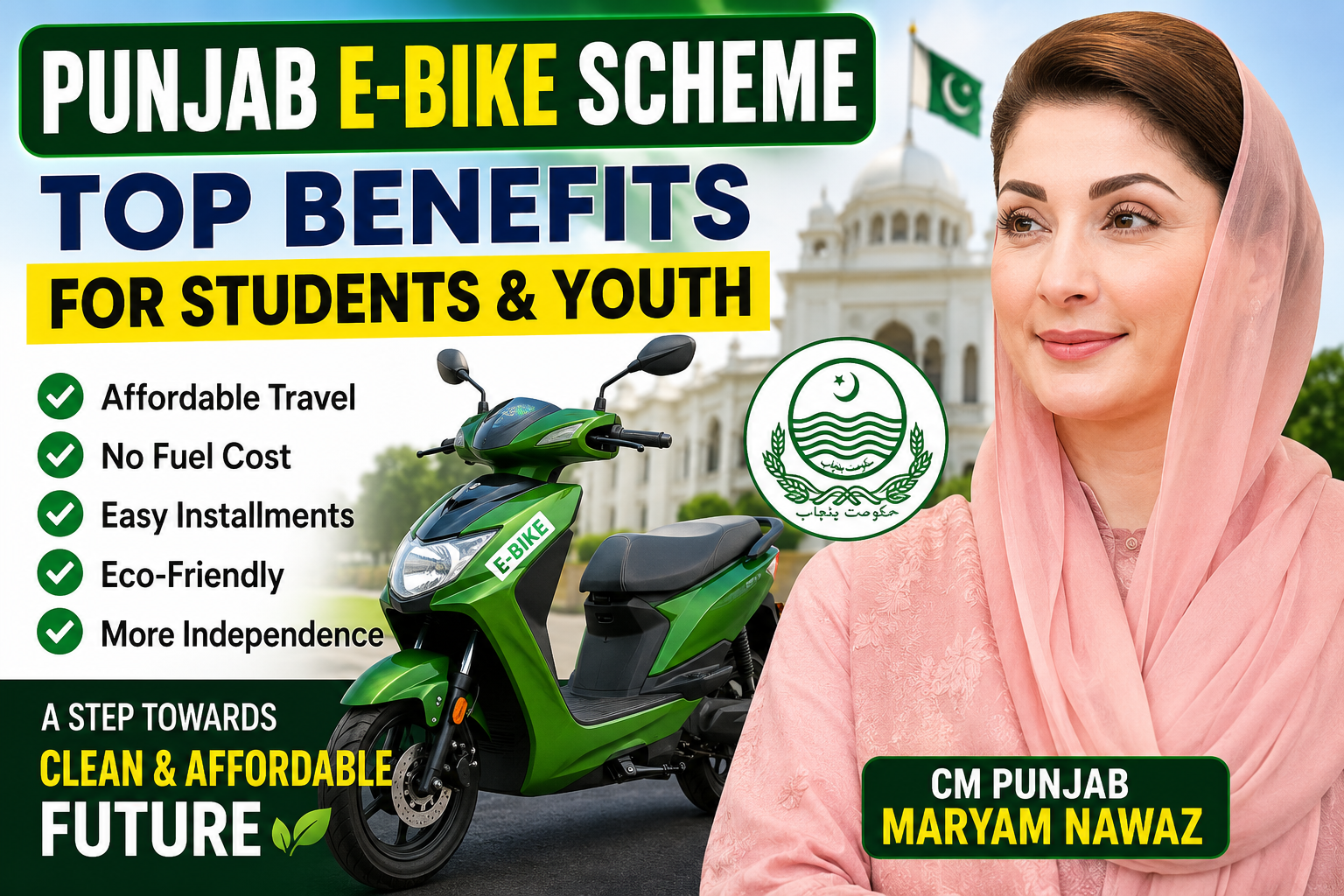
The Punjab E-Bike Scheme has become one of the most talked-about youth support initiatives in Pakistan, especially among students and young professionals who face daily travel challenges. With rising fuel prices and increasing transportation issues in urban and semi-urban areas, this scheme is designed to make mobility easier, more affordable, and environmentally friendly.
This program is part of broader youth-focused development efforts supported by the Government of Punjab Government of Punjab under the leadership of Chief Minister Maryam Nawaz Sharif Maryam Nawaz Sharif. The focus is not only on transportation but also on empowering students with independence and financial relief.
Understanding the Punjab E-Bike Scheme
The Punjab E-Bike Scheme is a government initiative aimed at providing electric bikes on easy installments or subsidized plans to students and young individuals. The main purpose is to reduce transport costs and promote clean energy usage.
Many students in colleges and universities struggle with daily commuting due to limited public transport and high petrol expenses. This scheme helps solve both issues at once by offering an electric alternative that is cost-effective and easy to maintain.
Key Features of the Scheme
Below is a simple overview of the main features of the Punjab E-Bike Scheme:
| Feature | Details |
|---|---|
| Target Group | Students and young individuals |
| Vehicle Type | Electric bikes (E-Bikes) |
| Financial Support | Subsidy and easy installment plans |
| Fuel Type | 100% electric (no petrol required) |
| Purpose | Affordable transport + eco-friendly travel |
| Maintenance | Low-cost compared to petrol bikes |
Top Benefits of the Punjab E-Bike Scheme
1. Affordable Monthly Installments
One of the biggest advantages is that students do not need to pay the full price upfront. Instead, they can pay in small monthly installments, making it easier for families with limited income to manage transportation costs.
2. Zero Fuel Expense
Since these bikes run on electricity, there is no need to buy petrol. This is a major benefit at a time when fuel prices are constantly increasing. Charging an electric bike costs significantly less compared to filling a petrol tank.
3. Support for Students’ Daily Travel
Many students travel long distances to reach colleges and universities. The E-Bike Scheme provides them with a reliable and personal transport option, reducing dependence on overcrowded public transport.
4. Environment-Friendly Initiative
Electric bikes help reduce air pollution and noise pollution. By encouraging clean energy transportation, the scheme supports a healthier environment for future generations.
5. Independence for Young Riders
Students often depend on family members or public transport schedules. With their own e-bike, they gain independence and flexibility in managing their daily routine.
6. Reduced Maintenance Costs
Compared to traditional bikes, electric bikes have fewer mechanical parts. This means fewer breakdowns and lower maintenance expenses, which is ideal for students managing tight budgets.
7. Encouragement for Modern Transport Adoption
The scheme also helps young people adapt to modern technology. Electric mobility is becoming a global trend, and this initiative prepares students for future transportation systems.
8. Time-Saving Solution
Traffic and waiting times for buses or vans can be frustrating. Having an e-bike allows students to travel directly without delays, saving valuable time every day.
Why This Scheme Matters for Punjab Youth
The Punjab E-Bike Scheme is not just about transportation; it is about supporting the lifestyle and future of young people. In many areas, students drop out or face difficulty continuing education due to travel costs and transport issues. This initiative helps reduce that burden.
It also reflects a shift toward modern, sustainable solutions in public policy. Instead of relying only on traditional fuel-based transport, the focus is moving toward clean energy alternatives.
Who Can Benefit the Most?
- College and university students
- Young job seekers
- Individuals living in areas with limited public transport
- Families looking for cost-effective travel solutions
After understanding the basic structure and advantages of the Punjab E-Bike Scheme, it is important to look deeper into how students can apply, who qualifies, and what long-term impact this initiative may bring for youth mobility and education support in Punjab.
This continuation focuses on practical aspects and broader social effects of the scheme introduced by the Government of Punjab Government of Punjab under the leadership of Chief Minister Maryam Nawaz Sharif Maryam Nawaz Sharif.
Eligibility Criteria for Students and Youth
The scheme is mainly designed for students and young individuals who need affordable transportation. While exact rules may be updated by authorities, the general eligibility requirements include:
| Requirement | Details |
|---|---|
| Age Limit | Usually 18 years and above |
| Education Status | Enrolled in college or university (for student category) |
| Nationality | Pakistani citizen with valid CNIC/B-Form |
| Driving Requirement | Valid learner or driving license (where applicable) |
| Financial Status | Preference to low and middle-income applicants |
These conditions help ensure that the scheme benefits those who genuinely face transportation difficulties.
Application Process Explained Simply
The application process is designed to be user-friendly so that students can easily apply without confusion. It is expected to be handled through official government portals and designated centers.
Step-by-Step Process
- Visit the official Punjab government transport or youth program portal
- Create an account using CNIC details
- Fill in personal and educational information
- Upload required documents (ID card, student proof, etc.)
- Select e-bike installment or subsidy option
- Submit application and wait for verification
After verification, selected candidates are informed through SMS or official communication channels.
Economic Impact on Students and Families
One of the strongest benefits of the scheme is financial relief. Transportation costs are a major burden for many families in Punjab, especially when students attend institutions far from home.
With electric bikes:
- Monthly travel expenses are reduced significantly
- Families can manage education costs more easily
- Students gain financial independence at an early stage
This creates a more balanced education environment where transport does not become a barrier.
Long-Term Social Benefits
The Punjab E-Bike Scheme is expected to create long-lasting changes in society, especially in how young people move and interact with their environment.
1. Increased Education Access
Students from rural and semi-urban areas can travel more easily to educational institutions without depending on limited public transport.
2. Employment Opportunities
Young job seekers can attend interviews and workplaces on time, increasing their chances of employment.
3. Technology Awareness
The adoption of electric vehicles increases awareness about modern technology and renewable energy solutions.
4. Reduced Traffic Pressure
More personal electric bikes may reduce dependency on overcrowded buses and vans, improving overall traffic flow in cities.
Environmental Advantages in Detail
Electric mobility plays a key role in reducing environmental damage. The scheme contributes to:
- Lower carbon emissions
- Reduced air pollution in cities
- Less noise pollution in crowded areas
- Promotion of clean energy transportation habits
Over time, these improvements support healthier urban living conditions.
Challenges and Real-World Considerations
While the scheme offers many benefits, there are some practical challenges that may appear during implementation:
- Charging infrastructure may be limited in some areas
- Initial demand may be higher than supply
- Awareness among rural students may take time to spread
- Maintenance services for electric bikes need expansion
These challenges are normal in early stages of large public programs and usually improve as systems develop.
Future Expansion Possibilities
If the scheme continues successfully, it can expand in several directions:
- Introduction of e-scooters for female students
- Expansion to technical and vocational training students
- More charging stations across Punjab
- Integration with digital transport tracking systems
- Larger subsidy programs for low-income families
Such developments would make the program even more effective in the coming years.
Role of Youth in Shaping the Program’s Success
Young people are the main beneficiaries, but they also play an important role in making the program successful. Their feedback, usage patterns, and responsible driving habits will directly influence how the scheme evolves.
By adopting electric mobility responsibly, students contribute to a cleaner and more efficient transport culture across Punjab.