
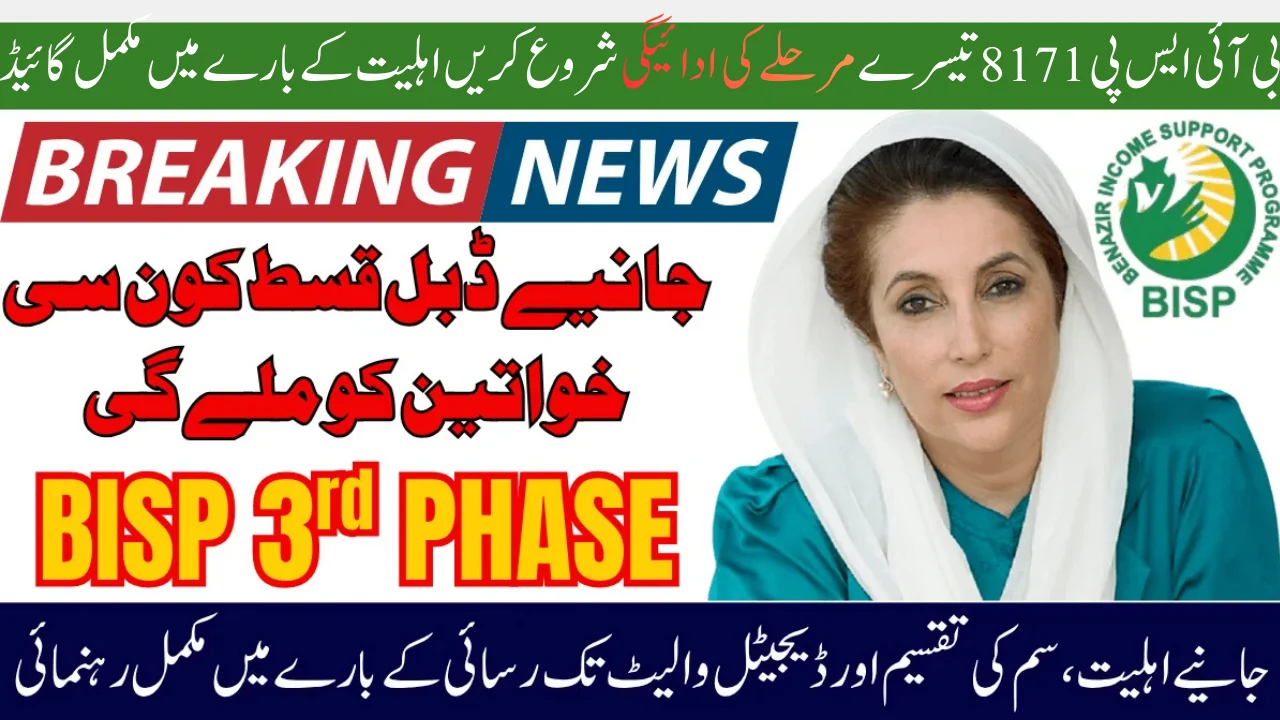
BISP 8171 Third Phase Payments
The new payment distribution for 2026 will formally begin on January 1, 2026, according to BISP. It will be quicker, safer, and more convenient for eligible families to receive their quarterly payment of Rs 13,500 via the Digital Wallet SIM. Beneficiaries must first check their eligibility on the 8171 web portal before receiving the payment. If they are eligible, they must visit the closest Tehsil office for biometric verification. Following verification, a Digital Wallet SIM will be issued and activated, enabling direct access to BISP funds on their mobile device.
Start of BISP 8171 Third Phase Payments
Low-income families in Pakistan have always benefited greatly from the Benazir Income Support Program. Millions of women receive regular financial support through this welfare program to help them manage household expenses and enhance their quality of life. The government has confirmed that the new disbursements will formally start on November 17, 2025, marking the start of the program’s third phase of payments.Benazir Kafalat beneficiaries will receive Rs. 26,500 under this most recent phase, which includes any outstanding or combined installments. The third phase of BISP 8171 payments will begin on November 17, 2025. A Comprehensive Guide to Digital Wallet Access, SIM Distribution, and Eligibility Additionally, in order to improve the security and convenience of payment transfers,For all qualified participants, BISP is offering free SIM cards and digital wallet accounts. By guaranteeing that beneficiaries can simply withdraw their payments from banks, ATMs, or Point-of-Sale (POS) retailers without worrying about deductions or fraud, this step represents a significant technological advancement in the welfare system.
Full Information Regarding the Third Phase Payment
BISP beneficiaries will start getting their new installment under the Benazir Kafalat Program on Monday, November 17, 2025. The authorities performed data verification and dynamic registry updates to ensure transparency during the short disbursement pause that preceded this third phase. The entire sum of Rs. 26,500 will now be available to women who had outstanding payments or were unable to pick up their final installment in July or August of 2025. To guarantee that every rupee reaches the intended recipient, the payments will be made via digital wallets connected to the beneficiaries’ CNICs. In order to guarantee that aid reaches only truly worthy families, this stage will also assist in identifying ineligible cases and verifying those who were previously under review.
Who Won’t Get Paid During This Stage
Due to ineligibility or insufficient documentation, some beneficiaries will not be paid during the third phase. Among them are:
- property owners or filers with significant financial resources.
- beneficiaries who have assets in their names, such as cars or land.
- People who recently completed the Hajj or Umrah are regarded as having stable finances.
- women who engage in business or have substantial bank account balances.
- those who, in spite of several reminders, failed to finish the Dynamic Registry survey.
- These people will be temporarily barred and, subject to revised eligibility requirements, may reapply after two years.
Launch of Free SIM Cards and Digital Wallets
The government started the Digital Wallet and Free SIM Distribution Initiative on November 17, 2025, in an effort to update the BISP payment system. This project will involve more than 10 million households. A complimentary SIM card that is directly connected to her CNIC will be given to each qualified recipient. She will be able to activate a Digital Wallet Account with this SIM, which will enable the automatic deposit of BISP funds. ATMs, bank counters, and authorized point-of-sale (POS) retailers like HBL Konnect and Bank Alfalah agents will all allow beneficiaries to withdraw their payments. This contemporary system guarantees that only the legitimate woman receives the money, gets rid of middlemen, and reduces fraud.
Government’s Vision Behind Digitalization
The move toward Digital Wallets is part of Pakistan’s broader Digital Governance Vision, aimed at promoting financial inclusion and ensuring transparency in government aid programs. Previously, beneficiaries had to wait in long queues at payment centers or deal with unauthorized agents who often made illegal deductions.The new system directly addresses these issues by giving women full control over their funds.Moreover, the government plans to expand the use of these digital wallets for future welfare initiatives, including education stipends, health programs, and utility subsidies.

Conclusion
The third phase of BISP 8171 payments beginning on 17 November 2025 signifies a major transformation in Pakistan’s social protection framework. By combining financial assistance with digital innovation, the government is ensuring that aid reaches the most vulnerable families securely and efficiently. The new Digital Wallets and Free SIM system provide beneficiaries the independence to manage their funds safely marking a new era of transparency, empowerment, and hope for millions of women nationwide.