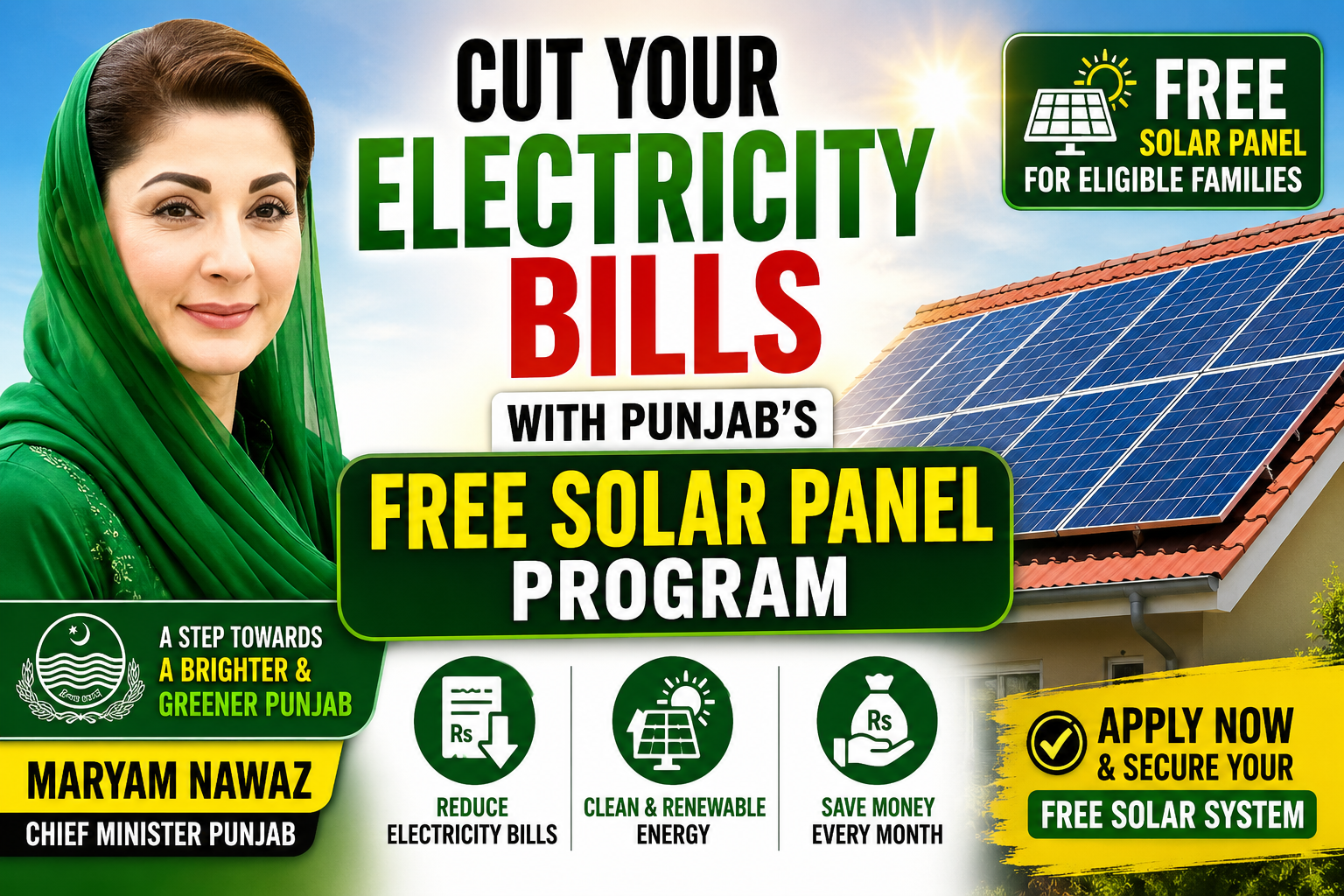
Electricity costs in Pakistan have been rising steadily over the past few years, putting pressure on household budgets and small businesses. In response to this challenge, the Government of Punjab has introduced a solar energy initiative aimed at supporting families by shifting them toward renewable and cost-saving energy solutions. The program, widely known as the Punjab Free Solar Panel Scheme, is designed to help eligible households reduce dependency on traditional grid electricity and move toward cleaner, solar-based power.
This initiative reflects a broader shift in energy planning across the country, where renewable energy is becoming a practical solution rather than a luxury. Solar power, in particular, has gained strong attention because of its long-term savings, low maintenance, and ability to function in areas with high sunlight exposure—conditions that are widely available across Punjab.
Overview of Punjab Free Solar Panel Program
The Punjab solar panel program is structured to provide selected households with solar systems either at fully subsidized rates or completely free of cost, depending on eligibility criteria and consumption levels. The main goal is to reduce electricity bills for low and middle-income families while also reducing pressure on the national grid.
The program is being implemented in phases, with priority given to households that consume limited electricity and are struggling with monthly bills. The government’s focus is to ensure that the most deserving families benefit first, especially those who rely heavily on basic electricity usage such as fans, lights, and small appliances.
Maryam Nawaz has emphasized energy relief as part of broader public welfare programs in Punjab, especially targeting inflation-hit households and rural communities where electricity costs form a major portion of monthly expenses.
Key Features of the Solar Scheme
The solar program is not just about installing panels; it includes a complete setup designed for long-term usability. The systems being provided generally include solar panels, inverters, mounting structures, and basic wiring to ensure smooth installation.
Below is a simple breakdown of the expected features:
| Component | Description |
|---|---|
| Solar Panels | High-efficiency panels designed for home electricity generation |
| Inverter | Converts solar energy into usable household electricity |
| Mounting System | Secure installation structure for rooftops |
| Wiring & Setup | Safe electrical connections for home usage |
| Net Metering (in some cases) | Allows extra electricity to be sent back to the grid |
The actual system size depends on household electricity usage. Smaller systems are typically assigned to low-consumption homes, while slightly larger setups may be considered for families with moderate energy needs.
Eligibility Criteria (General Understanding)
Although the exact requirements may vary depending on official updates, most government solar programs in Punjab follow a similar eligibility pattern. The focus remains on fairness and energy need-based distribution.
Common eligibility factors include:
- Monthly electricity usage within a defined low-unit range
- Household must be registered under a valid electricity connection
- Priority for low-income families
- No history of electricity theft or bill defaulting
- Preference for rural or underdeveloped urban areas
These conditions are meant to ensure that the program benefits those who are most affected by high electricity costs.
Why Solar Energy is Becoming Important in Punjab
Punjab receives a high level of sunlight throughout the year, making it suitable for solar power generation. Unlike conventional electricity, solar energy does not depend on fuel costs or external supply fluctuations. Once installed, solar systems can significantly reduce monthly electricity bills.
For many households, even a small solar setup can power essential appliances during the day. Over time, this reduces dependency on grid electricity and provides more control over energy usage.
Another important factor is stability. In areas where load shedding or voltage fluctuations are common, solar systems provide a more consistent energy source. This is particularly useful for students, small shop owners, and families working from home.
Estimated Household Impact
To better understand the potential benefits, here is a general view of how solar installation can affect monthly electricity usage:
| Usage Level | Before Solar | After Solar (Estimated) |
|---|---|---|
| Low usage household | High dependency on grid | 40%–70% bill reduction |
| Medium usage household | Frequent bill fluctuations | 30%–60% bill reduction |
| Rural homes | Limited electricity access | Improved daily energy availability |
These estimates depend on system size, sunlight availability, and household consumption habits.
The success of solar energy programs largely depends on how smoothly the application, verification, and installation process is handled. In Punjab’s ongoing solar initiative, the government has tried to keep the system simple so that eligible households can apply without facing complicated procedures or unnecessary delays. The focus is on transparency and fair distribution so that the benefits reach the right families.
Application and Registration Process
In most cases, the registration process for the Punjab solar scheme is designed to be user-friendly. Applicants are typically required to provide basic household and electricity consumption details. This information helps authorities determine whether a home qualifies for the subsidy or free installation category.
The general steps include:
- Submitting CNIC and household details
- Providing latest electricity bill for verification
- Filling out a basic application form (online or through designated centers)
- Initial screening based on consumption level
- Final approval after verification survey
After submission, the data is cross-checked with electricity distribution companies to ensure accuracy. This step is important to avoid duplication and ensure that only eligible users are selected.
Installation and Technical Process
Once a household is approved, the installation process begins. A technical team is usually assigned to inspect the rooftop area to confirm whether it is suitable for solar panel setup. Factors such as roof strength, sunlight exposure, and available space are carefully evaluated.
After inspection, the installation team proceeds with the setup of solar panels, inverter connection, and internal wiring adjustments. The process is generally completed within a few hours to a couple of days depending on system size and location.
Below is a simplified view of how the installation workflow looks:
| Stage | Description |
|---|---|
| Site Inspection | Checking roof space and sunlight access |
| System Allocation | Assigning panel capacity based on usage |
| Installation Work | Mounting panels and connecting inverter |
| Testing Phase | Ensuring proper electricity generation |
| Handover | System officially activated for household use |
After installation, users are guided on how to monitor energy production and manage basic maintenance.
Maintenance and Performance Life
Solar systems installed under such programs are designed to require minimal maintenance. In most cases, panels only need occasional cleaning to remove dust or debris, especially during dry seasons. Since dust accumulation can reduce efficiency, keeping panels clean helps maintain consistent energy output.
Inverters and wiring systems are generally covered under service checks for a specific period, depending on government arrangements or partner organizations involved in the project.
Proper usage and care can extend the life of a solar system significantly, often lasting more than a decade with stable performance.
Economic and Social Impact
One of the most noticeable effects of this solar initiative is financial relief. Families that previously struggled with high monthly electricity bills are able to shift a portion of their energy consumption to solar power. This reduces overall dependence on grid electricity and helps manage household budgets more efficiently.
Beyond financial savings, the program also supports environmental improvement. Solar energy reduces reliance on fossil fuels, which contributes to lower carbon emissions. Over time, this shift can play a role in improving air quality and reducing environmental pressure in urban and rural regions.
In addition, small businesses such as shops, tuition centers, and small workshops also benefit from stable and cost-effective electricity, helping them maintain productivity during peak hours.
Common Challenges in Solar Adoption
Although solar energy offers many benefits, there are still a few challenges that need attention:
- Initial awareness gap in rural areas
- Misunderstanding about system capacity
- Weather dependency during cloudy or rainy days
- Need for proper maintenance habits
- Limited rooftop space in some urban homes
Addressing these issues requires awareness campaigns and technical support so that users can fully benefit from the system.
Practical Tips for Maximum Efficiency
Households using solar systems can improve performance by following a few simple practices:
- Keep panels clean and dust-free
- Avoid shading from trees or nearby structures
- Monitor daily energy usage patterns
- Use high-power appliances during peak sunlight hours
- Ensure periodic technical checkups
These small adjustments can help maximize energy output and ensure long-term savings.
Future Outlook of Solar Energy in Punjab
The direction of energy development in Punjab is gradually shifting toward renewable sources. Solar programs are expected to expand further as demand for electricity continues to rise. With technological improvements, future systems may become more efficient and capable of powering larger household loads.
There is also growing interest in integrating solar systems with smart monitoring tools, allowing users to track energy generation in real time. This type of digital integration could make energy management more efficient and user-friendly in the coming years.
As part of ongoing public welfare planning, energy relief initiatives are likely to remain a key focus in provincial development strategies, especially in regions where electricity demand is increasing rapidly.
Frequently Observed User Concerns
Many households share similar questions when considering solar installation under government programs:
- Whether the system fully replaces grid electricity
- How performance changes in winter months
- What happens during extended cloudy periods
- Whether battery storage is included in all setups
- How long approval and installation take
These concerns are generally addressed during the verification and installation stages, where technical teams guide users based on their specific system type and household needs.