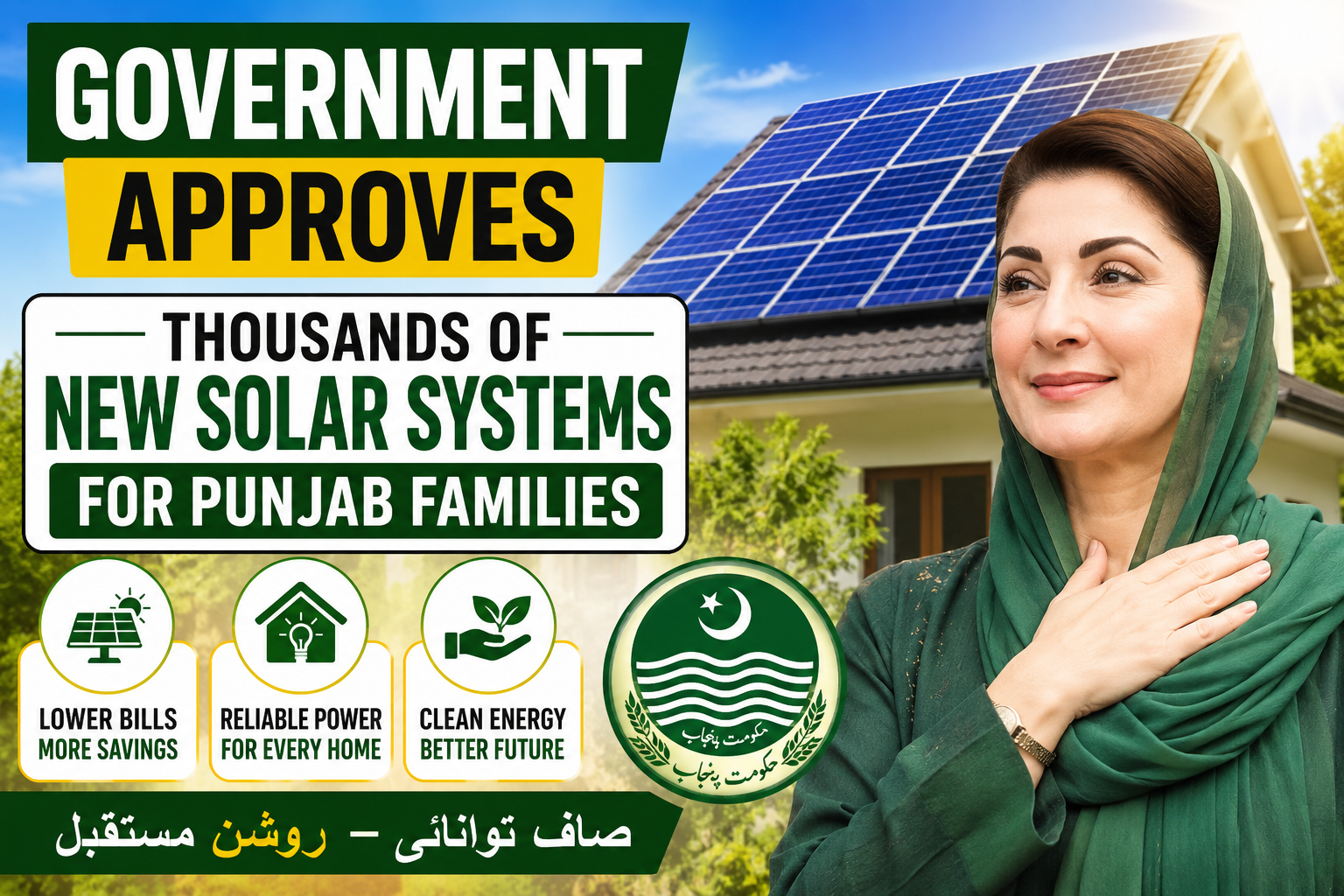
The Government of Punjab has recently moved forward with a major clean energy initiative aimed at providing thousands of solar systems to households across the province. This step is part of a broader effort to reduce electricity costs, improve energy access in rural and urban areas, and promote renewable energy solutions in Pakistan.
The rising cost of electricity and frequent power shortages have pushed many families toward alternative energy sources. Solar energy has become one of the most practical and sustainable options, especially in areas where grid electricity is either expensive or unreliable. Through this new approval, eligible families in Punjab are expected to benefit from subsidized or government-supported solar installations designed to meet basic household energy needs.
This initiative is also aligned with long-term environmental goals, as solar energy reduces dependence on fossil fuels and helps lower carbon emissions. For many households, this program represents not only financial relief but also energy independence.
Purpose Behind the Solar System Initiative
The main objective of this government-backed solar program is to support low and middle-income families who struggle with high monthly electricity bills. In many parts of Punjab, electricity demand continues to rise while supply remains unstable, especially during peak summer seasons.
By introducing solar systems at a large scale, the government aims to:
- Reduce household dependency on traditional grid electricity
- Provide affordable and sustainable energy solutions
- Improve electricity access in remote and rural regions
- Support environmental sustainability goals
- Lower overall pressure on the national energy system
This initiative is expected to gradually shift a portion of residential energy consumption toward renewable sources, making electricity usage more efficient and cost-effective.
How the Solar System Program Works
The program is structured to ensure fair distribution among eligible families. While exact eligibility criteria may vary depending on implementation phases, the general focus remains on households with limited income and high electricity usage burdens.
Selected households will receive solar systems that typically include solar panels, inverters, batteries, and installation support. These systems are designed to cover basic household electricity needs such as lighting, fans, mobile charging, and small appliances.
Below is a simple breakdown of how the system is expected to be provided:
| Component | Description |
|---|---|
| Solar Panels | Capture sunlight and convert it into electricity |
| Inverter | Converts solar energy into usable home electricity |
| Battery Storage | Stores extra energy for nighttime or cloudy days |
| Installation Support | Professional setup and connection services |
| Maintenance Guidance | Basic instructions for system care and usage |
The installation process is expected to be handled by trained technical teams to ensure safety and proper functioning of the systems.
Expected Benefits for Punjab Families
The introduction of thousands of solar systems can bring several practical benefits for households across Punjab. One of the most immediate advantages is the reduction in monthly electricity bills, which has become a major concern for many families in recent years.
Other key benefits include:
- Lower Energy Costs: Families can significantly reduce dependence on paid electricity units
- Reliable Power Supply: Solar systems provide backup during load shedding
- Improved Rural Access: Remote areas can access electricity without waiting for grid expansion
- Environmental Impact: Cleaner energy reduces pollution and supports sustainability
- Long-Term Savings: After installation, solar energy reduces ongoing electricity expenses
In many cases, even small solar setups can make a noticeable difference in daily life, especially for households experiencing frequent power outages.
Growing Shift Toward Renewable Energy in Pakistan
Pakistan has been gradually increasing its focus on renewable energy solutions due to rising fuel costs and increasing energy demand. Solar energy, in particular, has gained popularity because of the country’s high sunlight availability throughout most of the year.
Punjab, being the most populous province, plays a key role in this transition. Government-backed solar programs are becoming an important part of the energy strategy, helping to reduce pressure on the national grid while promoting clean energy adoption at the household level.
The new approval of solar systems for thousands of families reflects a continuation of this broader policy direction. It also highlights the importance of decentralizing energy production, where households can generate their own electricity instead of relying entirely on centralized power stations.
Key Highlights of the Solar Initiative
To better understand the scope of this program, here is a summarized overview:
| Feature | Details |
|---|---|
| Program Type | Government-supported solar energy distribution |
| Target Area | Punjab, Pakistan |
| Beneficiaries | Low and middle-income families |
| Energy Source | Renewable solar power |
| Main Goal | Reduce electricity costs and promote clean energy |
| Installation Support | Included through trained technical teams |
The program is expected to roll out in phases, with priority given to areas facing severe electricity shortages or higher dependency on expensive grid electricity.
The rollout of solar systems across Punjab is not just a short-term relief measure but part of a structured energy transition plan. While the first phase focuses on distribution and installation, the second phase highlights eligibility clarity, implementation challenges, and the long-term impact on households and the energy sector.
Eligibility Criteria and Selection Process
To ensure transparency and fair distribution, the program is designed to prioritize families that genuinely need financial and energy support. Although the final criteria may vary depending on district-level execution, the general selection process is expected to focus on income level, electricity consumption, and residential conditions.
Households are typically considered based on:
- Monthly electricity usage history
- Verified household income level
- Existing connection type (residential users only)
- Area-based load shedding impact
- Priority for rural and underserved regions
Government teams may also use digital records and electricity billing data to identify eligible households. In some cases, local administrative verification is expected to confirm applicant details to avoid duplication or misuse.
Installation Process Step-by-Step
Once a household is selected, the installation process follows a structured technical workflow. The goal is to ensure that every system is installed safely and operates efficiently under local conditions.
| Step | Process Description |
|---|---|
| Step 1 | Household verification and approval confirmation |
| Step 2 | Site inspection by technical team |
| Step 3 | System sizing based on energy needs |
| Step 4 | Installation of solar panels on rooftop or suitable space |
| Step 5 | Setup of inverter and battery system |
| Step 6 | Electrical connection to household wiring |
| Step 7 | Testing and performance check |
| Step 8 | Basic user guidance and maintenance instructions |
Each installation is expected to be completed by trained technicians to ensure compliance with safety standards and long-term system durability.
Challenges in Large-Scale Solar Distribution
While the initiative is widely appreciated, large-scale implementation always comes with practical challenges. The government and executing agencies may need to manage several technical and logistical issues during rollout.
Some of the common challenges include:
- Supply chain delays in solar equipment availability
- High demand vs limited initial stock of systems
- Technical maintenance capacity in rural areas
- Awareness gap among users regarding solar usage
- Weather and environmental impact on system efficiency
Addressing these challenges requires proper planning, trained manpower, and continuous monitoring to ensure the program remains effective and sustainable.
Long-Term Impact on Electricity System in Punjab
If implemented successfully, the solar distribution program can significantly change how electricity is consumed in Punjab. Instead of relying entirely on centralized power generation, households will gradually shift toward self-generated renewable energy.
This shift can bring several structural improvements:
- Reduced load on national electricity grid
- Lower peak-hour electricity demand
- Increased energy independence at household level
- Improved resilience during power outages
- Gradual reduction in electricity subsidy burden
Over time, this may also encourage private investment in renewable energy technologies, making solar systems more accessible and affordable for the general population.
Environmental and Economic Benefits
Beyond household savings, the environmental impact of solar energy adoption is also a key factor behind this initiative. Solar power generation produces no direct emissions, making it a cleaner alternative to fossil fuel-based electricity.
Key benefits include:
- Reduced carbon emissions across urban and rural areas
- Lower dependence on imported fuel sources
- Improved air quality in densely populated regions
- Promotion of sustainable development practices
Economically, households that switch to solar energy can redirect their monthly electricity savings toward other essential needs such as education, healthcare, and small business development.
Program Expansion Possibilities
Future phases of the program may include expansion into additional districts and increased system capacity per household. There is also potential for introducing net metering options, allowing families to sell excess electricity back to the grid in certain areas.
Possible future developments:
- Expansion to more districts across Punjab
- Inclusion of higher-capacity solar systems
- Integration with smart energy monitoring systems
- Support for small businesses and agricultural users
- Public-private partnerships for faster deployment
These developments could further strengthen Pakistan’s renewable energy infrastructure and make solar energy a mainstream household solution.
Overall Impact on Daily Life
For many families, especially in areas affected by load shedding, the introduction of solar systems can bring immediate improvements in daily life. Simple activities like lighting homes at night, running fans during hot weather, and charging devices become more reliable and cost-efficient.
At the same time, it reduces dependency on fluctuating electricity prices, which have been a major concern for households in recent years. Over time, this shift may change energy consumption habits and encourage more responsible usage of electricity.
The program continues to develop as implementation progresses across Punjab, with authorities focusing on ensuring fair distribution, technical quality, and long-term sustainability of the solar systems being installed.