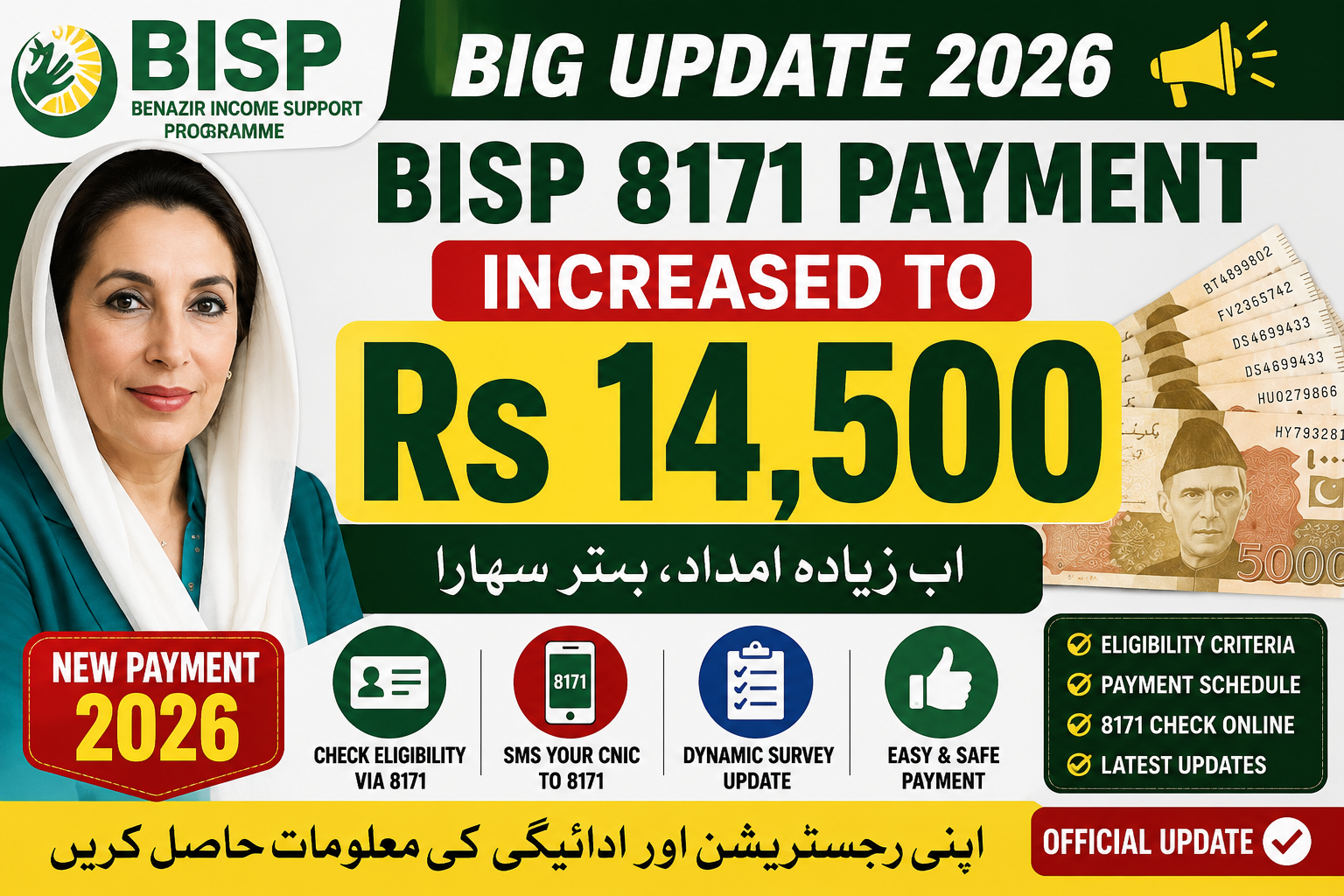
The Government of Pakistan has announced a significant increase in the Benazir Income Support Programme (BISP) payment for 2026. Under the latest update, eligible families will now receive Rs 14,500 per installment, providing additional financial support to millions of low-income households across the country.
This increase has been introduced to help deserving families cope with rising inflation, increasing utility bills, higher food prices, and other household expenses. For families already receiving assistance through BISP or those planning to apply, understanding the latest eligibility criteria, payment process, and verification requirements is essential.
In this comprehensive guide, we explain everything you need to know about the BISP 8171 payment increase to Rs 14,500 in 2026.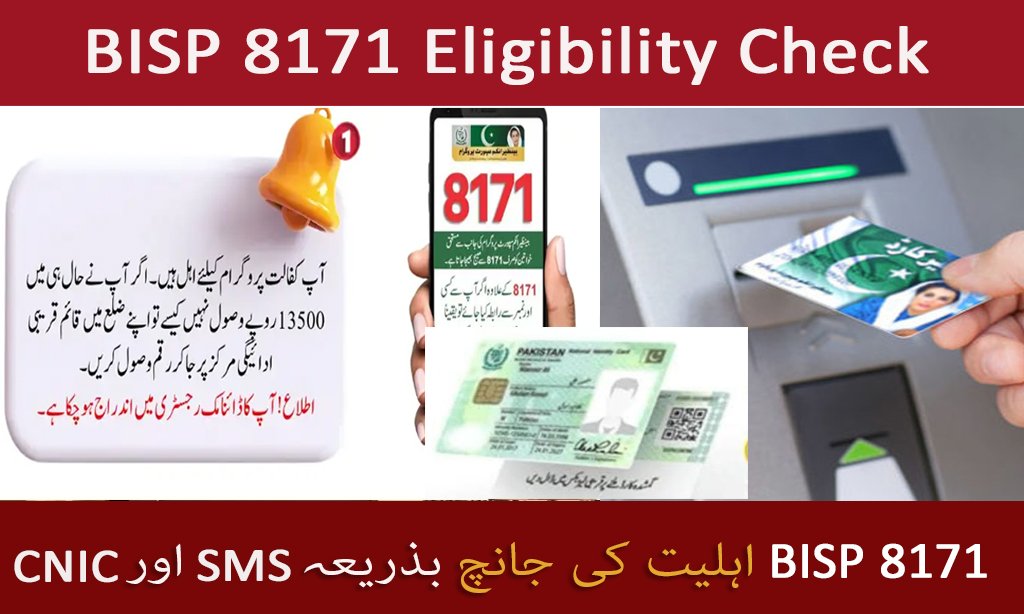
Why Has the BISP Payment Been Increased to Rs 14,500?
Over the past few years, inflation has affected the purchasing power of ordinary citizens. Essential commodities such as food, electricity, gas, education, and healthcare have become more expensive. To provide better support to vulnerable families, the government has revised the quarterly payment amount.
Some major reasons behind the increase include:
- Rising inflation rates across Pakistan
- Increased cost of food and household necessities
- Higher utility expenses
- Expansion of social welfare initiatives
- Government efforts to strengthen poverty reduction programs
The revised payment is expected to help families manage their basic needs more effectively and reduce financial pressure on low-income households.
BISP Payment Comparison (2024–2026)
| Year | Quarterly Payment | Annual Assistance | Purpose |
|---|---|---|---|
| 2024 | Rs 10,500 | Rs 42,000 | Basic financial support |
| 2025 | Rs 13,500 | Rs 54,000 | Inflation relief measures |
| 2026 | Rs 14,500 | Rs 58,000 | Enhanced social protection |
The increase reflects the government’s ongoing commitment to supporting deserving families through social welfare programs.
Who Can Receive the Rs 14,500 BISP Payment?
Eligibility for BISP continues to be determined through the National Socio-Economic Registry (NSER) and poverty assessment data.
You may qualify for the program if:
1. Low Household Income
Families with limited income and financial resources may qualify for assistance.
2. Widowed or Divorced Women
Women who are widowed, divorced, or facing financial hardship are among the primary beneficiaries.
3. No Government Employment
Households with immediate family members employed in government departments may not qualify under standard eligibility rules.
4. Limited Assets
Families without substantial property, business ownership, or significant financial assets are generally prioritized.
5. Approved Poverty Score
Applicants must fall within the poverty score range established by BISP authorities.
Importance of Updating Your NSER Survey
Many applicants become ineligible due to outdated information in the NSER database. If your financial situation has changed recently, it is highly recommended to complete the Dynamic Survey update.
Updating your information helps ensure:
- Accurate eligibility assessment
- Timely payment processing
- Avoidance of account suspension
- Inclusion in future welfare initiatives
Beneficiaries should visit their nearest BISP registration center whenever requested for data verification.
How to Check BISP 8171 Payment Status
The government has made it easy for beneficiaries to verify their eligibility and payment details.
Method 1: Check Through SMS
Follow these simple steps:
- Open your mobile messaging application.
- Enter your 13-digit CNIC number.
- Send the CNIC number to 8171.
- Wait for the official confirmation message.
The response will inform you whether:
- You are eligible.
- Your payment has been released.
- Additional verification is required.
Method 2: Check Through the 8171 Web Portal
Applicants can also verify their status online.
Steps include:
- Visit the official 8171 portal.
- Enter your CNIC number.
- Complete the security verification code.
- Submit your details.
The portal will display:
- Eligibility information
- Payment status
- Registration updates
- Verification requirements
How Beneficiaries Can Receive the Rs 14,500 Payment
Eligible individuals can collect their payments through several authorized channels.
Available Payment Methods
- Designated BISP payment centers
- Partner bank ATMs
- Biometric verification camps
- Authorized retail payment agents
These payment methods are designed to make fund distribution safer, faster, and more transparent.
Important Guidelines for Beneficiaries
To avoid problems while receiving payments, keep the following points in mind:
- Always carry your original CNIC.
- Ensure your biometric verification is completed successfully.
- Never pay any fee to agents or middlemen.
- Immediately report unauthorized deductions.
- Follow instructions provided by official BISP representatives only.
Failure to follow official procedures may result in payment delays or verification issues.
Latest BISP 8171 Updates for 2026
The Benazir Income Support Programme continues to introduce new improvements aimed at making the payment process more transparent, efficient, and accessible for deserving families. Several important updates have been implemented in 2026 to ensure that assistance reaches eligible beneficiaries without unnecessary delays.
1. Dynamic Survey Re-Verification Process
One of the most important updates for 2026 is the continued verification of beneficiary records through the Dynamic Survey.
Many households registered years ago may have outdated information in the BISP database. To ensure that financial assistance reaches genuinely deserving families, authorities are reviewing and updating beneficiary data.
If you receive a notification from BISP regarding survey verification, it is important to visit the nearest registration center as soon as possible.
Failure to update your information may result in:
- Temporary suspension of payments
- Delayed installments
- Reassessment of eligibility status
- Removal from the beneficiary list in certain cases
Keeping your records updated helps avoid unnecessary interruptions in future payments.
2. Improved Biometric Verification System
Fingerprint verification issues have been a common complaint among beneficiaries, especially in rural areas. To address this challenge, BISP has expanded biometric verification facilities in multiple districts.
The updated system aims to:
- Reduce fingerprint mismatch problems
- Speed up payment processing
- Improve beneficiary verification accuracy
- Minimize fraud and unauthorized withdrawals
If your fingerprint verification fails, you should immediately contact the nearest BISP office for guidance regarding alternative verification procedures.
3. Expansion of BISP Coverage
The government has also expanded the reach of social protection programs to include more deserving families from underserved regions.
This expansion focuses on:
- Rural communities
- Underdeveloped districts
- Low-income urban households
- Families facing extreme financial hardship
As a result, many families who were previously excluded may now become eligible after completing the required registration and verification process.
4. Continued Focus on Women Empowerment
BISP remains committed to supporting women as primary beneficiaries of financial assistance programs.
Research has consistently shown that financial support provided directly to women is more likely to be spent on essential household needs such as:
- Food and nutrition
- Children’s education
- Healthcare expenses
- Household necessities
For this reason, eligible women continue to receive priority under the program.
Common Reasons Why Payments Get Delayed
Although BISP payments are released regularly, some beneficiaries experience delays due to administrative or verification issues.
The most common reasons include:
| Reason for Delay | Possible Solution |
|---|---|
| Outdated NSER information | Complete Dynamic Survey update |
| CNIC expired | Renew CNIC through NADRA |
| Biometric verification failure | Visit BISP office for assistance |
| Incomplete registration | Complete verification process |
| System update or payment cycle delay | Wait for official announcement |
Understanding these issues can help beneficiaries resolve problems quickly and avoid missing future installments.
How to Avoid Fraud and Scams
As BISP payments increase, fraud attempts also become more common. Beneficiaries should remain cautious and follow official procedures only.
Safety Tips
- Never share your CNIC details with unknown individuals.
- Do not pay money to anyone claiming to guarantee registration.
- Trust only official SMS messages received from 8171.
- Verify all information through official BISP channels.
- Report suspicious activities immediately.
Remember, BISP registration and payment verification services are provided through authorized channels only.
Frequently Asked Questions (FAQs)
When will the Rs 14,500 payment be distributed?
The revised payment amount is being distributed according to the official quarterly payment schedule announced by BISP for 2026. Payment dates may vary by district and region.
Will existing beneficiaries automatically receive the increased amount?
Yes. Eligible beneficiaries who remain active in the BISP database generally receive the revised payment amount without submitting a new application.
Is re-registration required for everyone?
No. Re-registration is not required for every beneficiary. However, individuals with outdated information or those requested to complete a Dynamic Survey should update their records promptly.
Can a family lose eligibility after verification?
Yes. If updated information shows that a household no longer meets the eligibility requirements, its status may be reviewed and assistance may be discontinued according to program rules.
What should I do if I do not receive an SMS from 8171?
You can check your status through the official 8171 portal or visit the nearest BISP office for assistance.
Can men register for BISP?
The program primarily registers women as beneficiaries. However, eligibility is assessed based on the overall financial condition of the household.
Benefits of the Rs 14,500 BISP Payment Increase
The increase in financial assistance is expected to provide several important benefits to low-income families.
Some key advantages include:
- Better support against rising inflation
- Improved access to food and household essentials
- Assistance with children’s educational expenses
- Help in managing medical and healthcare costs
- Additional relief for vulnerable households
While financial assistance alone cannot solve every economic challenge, it can provide meaningful support to families struggling with daily expenses.